
Erosion Control Fabric: Complete Buyer's Guide
Non-woven geotextile, erosion blankets, or TRMs — how to choose the right product for your slope, soil, and rainfall
Erosion control fabric is a broad category that covers several very different products. Choosing the wrong one — say, a biodegradable straw blanket where a permanent geotextile is needed — wastes money and leaves the slope exposed again in 12 months. This guide cuts through the confusion and helps you match the right product to your specific project.
The Three Main Product Types
Erosion control products fall into three practical categories based on how they work and how long they last:
- Non-woven geotextile fabric — permanent, engineered, drainage-focused
- Erosion control blankets (ECBs) — temporary or semi-permanent, biodegradable, revegetation-focused
- Turf reinforcement mats (TRMs) — permanent, open-structured, vegetation-integrated
Each fills a different role. The right choice depends on whether you need permanent or temporary protection, whether vegetation establishment is a goal, and what your slope grade and rainfall intensity look like.
Non-Woven Geotextile Fabric for Erosion Control
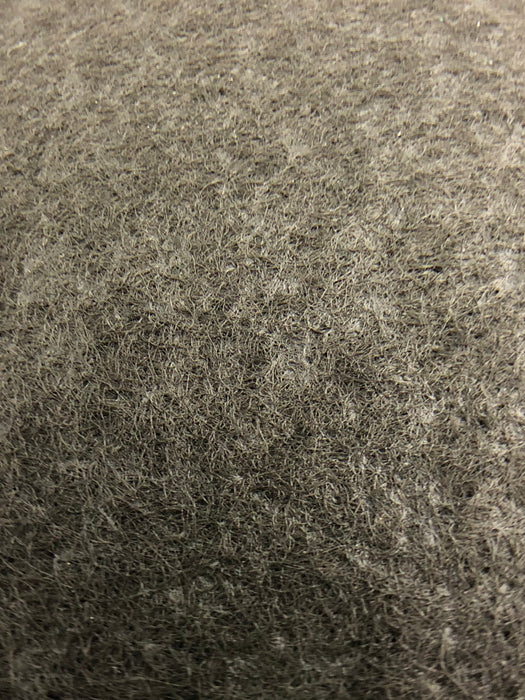
Non-woven geotextile is manufactured by needle-punching polypropylene fibers into a felt-like mat. It is permeable to water but retains soil particles, making it effective for separating soil from drainage aggregate on slopes, retaining walls, and channel banks.
What it does well
- Separates soil from drain rock or riprap on slopes
- Prevents fine soil particles from migrating through aggregate
- Provides long-term (25+ year) separation and filtration when buried
- Holds up under aggregate weight without tearing
What it doesn't do
- Does not physically hold soil in place on the surface (it needs cover — aggregate, mulch, or soil)
- Is not a substitute for erosion blankets in revegetation applications
Weight selection for erosion control applications
| Weight | Best Application |
|---|---|
| 4 oz | Low-slope separation, sandy soils, light drainage fabric behind walls |
| 6 oz | Moderate slopes, silt or clay soils, retaining wall drainage layer |
| 8 oz | Steep slopes, high rainfall, DOT drainage applications, rip-rap underliner |
| 12–16 oz | Commercial/DOT-spec applications, heavy silt load, stream bank armor underliner |
Erosion Control Blankets
Erosion control blankets (ECBs) are designed for surface protection during the critical period between slope disturbance and vegetation establishment. Unlike geotextile fabric, they work by physically covering and protecting bare soil from raindrop impact and sheet erosion while seeds germinate and roots develop.
Blanket types by material
- Straw blankets — single-net or double-net straw, biodegrades in 12–18 months, low to moderate slopes (under 3:1)
- Coir (coconut fiber) blankets — biodegrades in 2–3 years, higher tensile strength than straw, moderate to steep slopes (3:1 or steeper)
- Straw/coir blend — middle ground on cost, performance, and longevity
- Excelsior (wood fiber) blankets — biodegrades in 12–18 months, good for drainage channels and low-velocity applications
Key point: Erosion blankets are for surface protection and revegetation. Geotextile fabric is for subsurface separation and filtration. These are complementary products, not interchangeable ones.
Turf Reinforcement Mats (TRMs)
Turf reinforcement mats are open-structured, three-dimensional mats made from polypropylene or nylon. Unlike biodegradable blankets, TRMs are permanent — they remain in place after vegetation establishes and continue reinforcing the root zone to resist shear forces from high-velocity water.
TRMs are specified for applications where vegetation alone cannot resist the hydraulic forces on a slope or channel, including:
- High-velocity drainage channels and swales
- Stream banks in moderate-energy flow conditions
- Steep slopes (2:1 or steeper) where long-term stability is needed
- Roadside swales under DOT specifications
How to Choose by Application
Residential slope (lawn or garden, under 3:1 grade)
Most homeowners dealing with a moderate backyard slope during or after landscaping work will do well with a straw erosion blanket. It protects bare soil, supports seed germination, and biodegrades cleanly once grass is established. Install it over freshly seeded soil and stake it down at 3–4 foot intervals.
Steep slope (3:1 or steeper), revegetation goal
Use a coir blanket or coir/straw blend. Coir has higher tensile strength and lasts long enough for deep-rooted plants to fully establish. For very steep slopes (2:1 or steeper), consider a TRM instead of a blanket if the site will be subject to concentrated flow.
Riprap or drain rock slope liner (permanent)
This is where non-woven geotextile belongs. Install 8oz fabric under the rock layer as a separation and filtration layer. This prevents native soil from migrating up through the rock void spaces, which would eventually destabilize the slope armor.
Retaining wall drainage layer
Non-woven geotextile (4oz–6oz) wraps the drainage aggregate behind retaining walls to prevent soil migration into the drain zone. Without it, fines from the retained soil gradually fill the void space and hydraulic pressure builds.
Construction site temporary protection (regulatory)
Most local grading permits and DOT specs require temporary erosion control measures during construction. Straw blankets, silt socks, or silt fencing are common requirements. Check your local jurisdiction requirements before selecting a product.
Quick-Reference Application Table
Residential slope revegetation
Product: Straw erosion blanket | Grade: Single or double net | Longevity: 12–18 months
Steep slope revegetation (>3:1)
Product: Coir blanket | Grade: Standard coir | Longevity: 2–3 years
High-velocity channel/swale
Product: Turf reinforcement mat | Grade: TRM — varies by spec | Longevity: Permanent
Riprap / rip-rap underliner
Product: Non-woven geotextile | Grade: 8 oz | Longevity: Permanent
Retaining wall drainage layer
Product: Non-woven geotextile | Grade: 4–6 oz | Longevity: Permanent
Stream bank armor underliner
Product: Non-woven geotextile | Grade: 8–12 oz | Longevity: Permanent
Construction site temporary cover
Product: Straw blanket or silt sock | Grade: Light grade | Longevity: Until revegetated
Specs to Look For When Buying Erosion Control Fabric
For non-woven geotextile used in erosion control applications, the most important specifications are:
- Weight (oz/sy): Heavier = thicker, stronger, finer filtration. Match to application.
- AOS (Apparent Opening Size): How fine a particle the fabric retains. Match to your native soil particle size.
- Permittivity: How fast water moves through the fabric. Must be high enough not to back up water behind the fabric.
- Grab Tensile Strength: Resistance to tearing during installation and under aggregate load.
- UV Stabilization: Only matters if the fabric will be exposed. Buried fabric is not UV-degraded.
For erosion blankets, the key specs are blanket weight (oz/sy), net type (single vs double), and biodegradation timeline.
Shop Erosion Control Fabric at Pro Fabric Supply
Non-woven geotextile fabric in 8oz to 16oz weights for permanent erosion control and slope stabilization applications.
Shop Now ›Frequently Asked Questions
What is the best erosion control fabric?
The best erosion control fabric depends on your application. For permanent drainage filtration and separation on slopes, 6oz to 8oz non-woven geotextile is the standard choice. For temporary revegetation support on disturbed slopes, a biodegradable straw or coir erosion blanket is often better. For high-velocity channels requiring permanent stabilization with vegetation, a turf reinforcement mat (TRM) is the right product.
Is erosion control fabric the same as landscape fabric?
No. Erosion control fabric (non-woven geotextile) is an engineered product rated for hydraulic performance, soil particle retention, and tensile strength. Standard landscape fabric is designed primarily for weed suppression and does not meet the permeability or soil-retention specifications required for erosion control applications.
How long does erosion control fabric last?
Non-woven geotextile erosion control fabric is UV-stabilized and designed for permanent installation. When buried under soil or aggregate, it can last 25 years or more. Biodegradable erosion blankets (straw, coir) are designed to break down in 1 to 3 years as vegetation establishes.
What weight erosion control fabric do I need?
For most residential applications, 6oz to 8oz non-woven geotextile is appropriate. Lighter 4oz fabric works where erosion risk is low and soils are sandy. On steeper slopes or in high-rainfall areas, 8oz or heavier provides better soil retention. Always match fabric AOS to your soil particle size for effective filtration.
Do I need erosion control fabric under riprap?
Yes, in most cases. Non-woven geotextile installed under riprap prevents native soil from migrating up through the rock void spaces over time. Without it, the underlying soil gradually moves into the rock layer, which eventually destabilizes the slope armor. Use 8oz non-woven fabric as the underliner for residential riprap, and 8oz to 12oz for commercial or DOT applications.


