
Black vs White Landscape Fabric — Which Should You Choose?
Black landscape fabric is the default choice for most people, but white reflective fabric offers distinct advantages in specific situations — particularly in hot climates, nursery settings, and orchards. Choosing the right color can mean the difference between heat-stressed plants and healthy, productive ones.
This guide compares black and white landscape fabric across every relevant dimension: thermal performance, weed suppression, best applications, and specific product recommendations for each color.
Why Fabric Color Matters
Fabric color is not just aesthetic. It directly determines how the fabric interacts with incoming solar radiation, which drives soil temperature — one of the most important variables in plant health, root development, and weed seed germination.
Black Fabric: Absorbs Light
Black fabric absorbs solar radiation across the visible and near-infrared spectrum. This absorbed energy is converted to heat and transferred to the soil below. Effects:
- Raises soil temperature by 4–14°F above bare soil in direct sun
- Accelerates spring soil warm-up, benefiting warm-season crops
- Can create excessive root zone heat in summer in warm climates
- Provides excellent light blockage for weed suppression
White Fabric: Reflects Light
White fabric reflects solar radiation back upward rather than absorbing it. Effects:
- Keeps soil 3–10°F cooler than black fabric in hot conditions
- Reflects light upward into plant canopies, improving photosynthesis on lower leaves
- Reduces summer heat stress for cool-season and heat-sensitive crops
- Provides equal weed suppression to black (both block light from below)
Soil Temperature Comparison
| Cover Type | Summer Soil Temp vs Bare | Spring Soil Warm-Up |
|---|---|---|
| No cover (bare soil) | Baseline | Moderate |
| Black fabric (permeable) | +4–8°F warmer | Faster — excellent for cold climates |
| Black plastic (impermeable) | +8–14°F warmer | Fastest warm-up; can overheat in summer |
| White reflective fabric | 3–7°F cooler | Slower — not ideal for cold-climate spring |
| White HDPE plastic | 2–6°F cooler | Slight cooling effect in spring |
| Organic mulch (3 inches) | 2–5°F cooler (insulating) | Slightly slower |
These are general ranges reported across horticultural mulch studies — actual results vary with climate, fabric permeability, and sun exposure. If soil temperature is critical to your project, a soil thermometer is the most reliable way to confirm actual conditions.
Weed Suppression: Is Black or White Better?
This is where the answer might surprise people: color does not determine weed suppression effectiveness.
Weed seeds germinate in response to light. Both black and white fabric block light transmission when the fabric is sufficiently dense. A quality 4 oz white non-woven fabric suppresses weeds just as effectively as a quality 4 oz black fabric of equivalent construction.
What matters for weed suppression:
- Fabric weight and density: Heavier fabric with tighter fiber structure blocks more light more completely.
- Fabric coverage: Overlapping seams, proper edge anchoring, and cut-outs that aren't oversized.
- Cover material: Mulch or rock on top extends life and adds another light-blocking layer.
Use Case Guide
Ornamental landscape beds (year-round)
Black: Excellent | White: Good | Recommendation: Black — aesthetic standard; most common
Spring vegetable garden (cool climate)
Black: Best for soil warming | White: Not ideal | Recommendation: Black — accelerates warm-up for warm-season crops
Summer vegetable garden (hot climate)
Black: Can overheat roots | White: Keeps roots cooler | Recommendation: White — prevents heat stress
Nursery container pads
Black: Root zone overheating risk | White: Standard in commercial nurseries | Recommendation: White — protects container root zones
Orchard understorey
Black: Works for weed control | White: Improves fruit color | Recommendation: White — reflects light into canopy
Fence line / property edge
Black: Standard choice | White: Functional but unusual | Recommendation: Black — conventional and cost-effective
Under rock/gravel
Black: Most common | White: Functional | Recommendation: Black — covered either way; color doesn't matter
Best Applications for Black Landscape Fabric
⚫ Choose Black When:
- Installing in established ornamental landscape beds
- Cold climate spring soil warming for vegetables
- Under gravel or mulch (color not visible)
- Fence lines and property edges
- General-purpose weed barrier in most climates
- Budget matters — black is typically less expensive
⚪ Choose White When:
- Hot climate; summer heat stress is a concern
- Nursery container pads and growing areas
- Orchard rows where fruit color development matters
- Cool-season crops that suffer in hot soil
- Areas with exposure where light reflection benefits plants
Best Applications for White Landscape Fabric
White reflective fabric is the professional standard in:
- Commercial nurseries: Container pads throughout most warm-climate growing regions use white ground cover to protect root zones during peak summer heat.
- Apple, cherry, and berry orchards: Reflective white mulch under orchard rows improves light distribution to fruit and lower canopy, improving color uniformity and marketability.
- Hot-climate vegetable production: Strawberry, melon, and pepper growers in the Southwest and Southeast use white or silver reflective mulch to reduce heat stress in summer growing seasons.
- Greenhouse floor covering: White fabric maximizes light utilization in greenhouse environments by reflecting light upward.
🛒 Black & White Fabric Products
Black options:
- Black Landscape Fabric — Standard black weed barrier for beds and borders
- HDPE Roll Stock Black — Impermeable black plastic for total kill and vapor barrier use
- Permanent Weed Barrier Fabric 4.75 oz — Heavy-duty black fabric for permanent installations
White options:
- White Reflective Ground Cover Fabric — Nursery Grade — Commercial-grade permeable white fabric for nurseries, orchards, gardens
- HDPE Roll Stock White — White HDPE plastic for reflective row crops and vapor barrier use
Heat management accessories:
- 50% Shade Cloth — Reduce light and heat over heat-sensitive areas
Frequently Asked Questions
What is the difference between black and white landscape fabric?
Black landscape fabric absorbs solar radiation and transfers heat to the soil below, raising soil temperature. White reflective fabric reflects solar radiation upward, keeping soil cooler. Both suppress weeds; the choice depends on whether you want to warm or cool the soil.
Does black or white landscape fabric suppress weeds better?
Both colors suppress weeds equally well when the fabric is dense enough to block light transmission. Weed suppression depends on fabric weight and construction, not color.
When should I use black landscape fabric?
Use black landscape fabric when you want to warm the soil (spring planting, cold climates), in ornamental beds under mulch, in fence line weed barriers, or anywhere the heat-absorbing property is neutral or beneficial to surrounding plants.
When should I use white landscape fabric?
Use white landscape fabric in hot climates where summer heat stress is a concern, in nursery container areas to protect root zones, in orchards to improve fruit color development, and in any setting where keeping soil cooler is beneficial.
How much warmer does black fabric make the soil?
Black landscape fabric can raise soil temperatures by 4–14°F compared to bare soil in direct sun. The effect is highest with solid black plastic; permeable black fabric shows a smaller temperature increase than impermeable black film.
Is black or white landscape fabric better for vegetable gardens?
In cool climates or spring, black fabric for soil warming benefits warm-season crops like tomatoes and peppers. In hot climates or peak summer, white fabric prevents damaging heat stress. Some growers use black in spring then switch to white or organic mulch in summer.
Shop Black & White Landscape Fabric
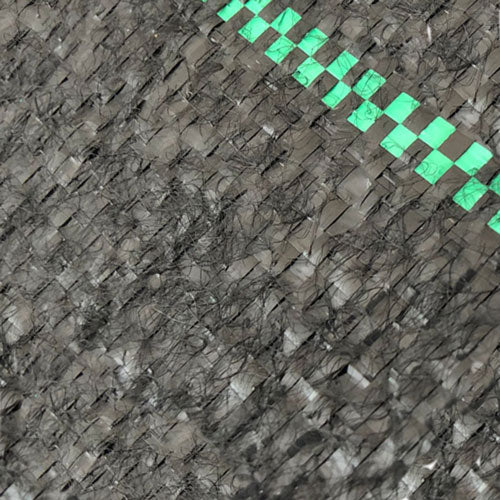
Every color, weight, and width to match your climate and application — from standard black weed barrier to commercial-grade white reflective fabric.
Shop Landscape Fabric →

